


Milei accelerates the auction of 4 hydroelectric plants
The Argentine government is moving forward with the privatization of the energy sector in the midst of negotiations with the United States for a “bailout”. After exhausting the IMF loan, the Executive accelerates its efforts to auction off public goods.
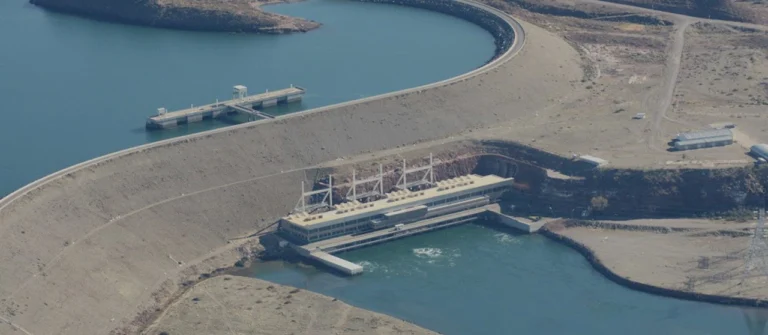
Hydroelectric dams such as “El Chocón” not only provide energy to the national system, but also control the country’s main reservoirs and regulate the flow of the Limay and Neuquén rivers, which are essential for water supply, agriculture and regional tourism. Photo: Government of Argentina
October 15, 2025 Hour: 9:30 am
🔗 Comparte este artículo
The government of Javier Milei accelerated the process of privatization of the Argentine energy sector with the approval of new modifications to the specifications of the international tender to sell four strategic hydroelectric complexes: Alicurá, El Chocón, Cerros Colorados and Piedra del Águila. The measure, made official by Resolution 1569/2025, reinforces a plan for the disposal of state assets that generates strong criticism and warnings about its long-term consequences.
RELATED:
Argentine President Milei Admits Role in Cristina Fernandez’s Imprisonment
The new Amending Circular No. 4 introduces key changes in the conditions of the tender, establishing that the new private awardees will assume the operation of the plants for a period of 30 years. This period may be extended in exchange for the payment of an annual fee to the State and compliance with maintenance and environmental safety commitments, the technical details of which have not yet been disclosed.
With this decision, the Ministry of Economy enables the final stage of the tender, urging prequalified companies to submit their technical and economic offers. The Executive intends to complete the process before the end of 2025, so that the new private concessions come into force during the first quarter of 2026.
This progress occurs in a context of weak institutional control. It was only at the beginning of October, and after almost two years of delay, that Congress formed the Bicameral Commission for the Monitoring of Privatizations.
However, its operability is uncertain, as five of its twelve members end their term in December, which will force a reconfiguration of its structure and could further delay its monitoring function.
The route of privatization
The path to the sale of these assets began in 2024, when the Ministry of Energy ordered the state-owned Energía Argentina (Enarsa) and Nucleoeléctrica Argentina (Nasa) to create four temporary corporations: Alicurá, El Chocón, Cerros Colorados and Piedra del Águila Hidroeléctrica Argentina S.A.
These companies, with a 98 percent stake by Enarsa and 2 percent by Nasa, were designed to receive the concessions once the contracts with the private operators of the 90s expired. Subsequently, Decree 590/2025, issued in August, transferred the shares to the Ministry of Energy and authorized their sale through a National and International Public Tender without establishing a base price, opening the door to a possible undervaluation of the assets.
The dams for sale, located in the basin of the Limay and Neuquén rivers, are fundamental to the national interconnected system. Together, they contribute about 20 percent of the country’s hydroelectric generation and are key to regulating the flows that supply water to communities and irrigation systems in the provinces of Río Negro and Neuquén.
A model that revives the 90s
The legal framework that enables this process is Law 23,696, enacted in 1989 and used for massive privatizations during the presidency of Carlos Menem. This historical parallel is pointed out by critics, who see in the current agenda a repetition of the neoliberal model that dismantled a large part of Argentina’s public patrimony.
The former Undersecretary of Energy, Federico Basualdo, warned about the economic risks of the tender. “They are dollarizing that income that companies are going to receive. On the other hand, they adjust that income for U.S. inflation,” explained to Página 12.
According to Basualdo, this mechanism could generate unviable contracts for the Argentine State in a devaluation scenario, leading to costly litigation in international courts.
“One wonders what country project they are thinking about. It is a privatization with structural consequences and a very circumstantial benefit, with an economic project that is increasingly making more water,” he said.
Sovereignty in dispute
The national government’s decision also generated tensions with the Patagonian provinces. The governor of Neuquén, Rolando Figueroa, regretted that the Executive “has decided to move forward unilaterally,” ignoring the demands to build a “new federal scheme for the administration of water resources.” From Río Negro, officials warned that the reprivatization “affects provincial interests,” given the strategic role of dams in water management.
The sale of the Comahue plants is part of a broader plan that includes the total or partial privatization of companies such as Intercargo, Corredores Viales, AySA and Nucleoeléctrica.
While the government accelerates the tenders, the opposition in Congress expresses its concern. In this way, the sale of the hydroelectric plants not only represents a transfer of economic assets, but also puts at stake control over strategic resources and Argentina’s energy and water sovereignty
Author: HGV
Source: Telesur